News & Trends
The World Cup Is Over. The Walking Isn't: What a Month of Soccer Fever Says About How America Moves
Spain beat Argentina 1-0 in extra time on Sunday at MetLife Stadium to win the 2026 World Cup, closing out the biggest sporting event ever staged on US soil. For a month, Americans watched soccer, walked to watch parties, and rediscovered pickup games in the park. Now comes the question that matters for your health: what sticks? Not the routines of elite athletes — those don't translate. What sticks is the boring stuff the tournament sneakily got millions of us doing: moving regularly, eating real meals, and caring about recovery. Here's the case for keeping it.
First, the result — because you'll be asked at the office
Spain 1, Argentina 0, after extra time. Ferran Torres scored the winner in the 106th minute in front of 80,663 fans at MetLife Stadium in East Rutherford, New Jersey, giving Spain its second men's World Cup title — and making Spain the first country to hold the men's and women's World Cup trophies at the same time, according to Wikipedia's account of the final. Argentina's goalkeeper Emiliano Martínez was heroic in defeat, setting a World Cup final record for saves before Argentina, down a man after Enzo Fernández's second yellow card, finally cracked. FIFA's official match report confirms the score and scorer.
It capped a tournament unlike any other: the first 48-team World Cup, 104 matches across the United States, Canada, and Mexico, per Wikipedia's tournament page — with the majority of games played in American stadiums, American time zones, and American summer heat.
The tournament was secretly a movement intervention
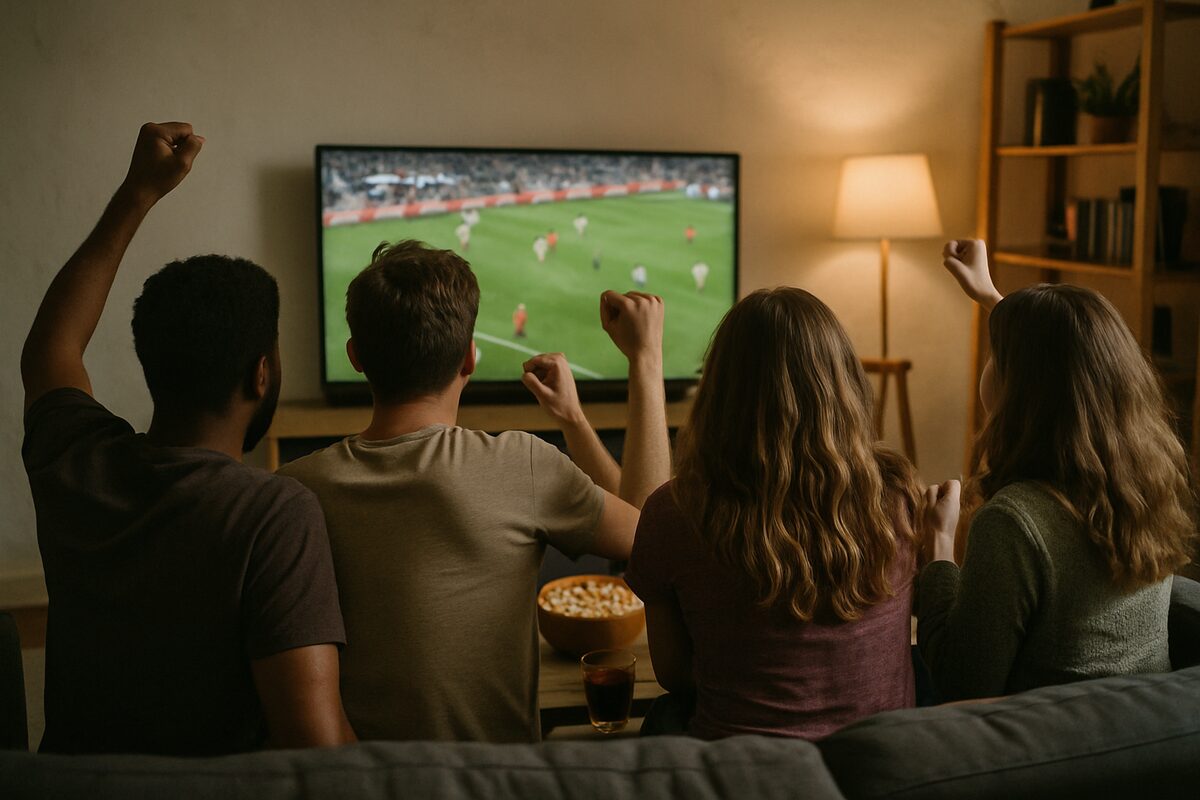
Here's what nobody put in a highlight reel. For a month, a country that mostly moves from couch to car to desk had constant, low-key reasons to move. People walked — to stadiums, to transit, to the bar with the good screen, to a friend's backyard. Parents kicked balls around with kids who suddenly wanted to be Ferran Torres or Aitana Bonmatí. Adults who hadn't touched a ball since high school found themselves in pickup games that started as a joke and ran ninety minutes anyway. Offices formed lunchtime viewing groups, and viewing groups have a way of turning into walking groups.
None of that counts as a workout in the app-tracked, heart-rate-zoned sense. All of it counts in the sense that actually matters: it was movement woven into ordinary life, attached to something fun, done with other people. That combination — incidental, social, enjoyable — is precisely the kind of activity people keep doing, because nobody has to talk themselves into it.
The tournament is over. The sidewalks are still there. The park is still there. The friends are still there. The only thing that ended Sunday night was the excuse.
What Ferran Torres can't teach you
Every World Cup produces a wave of content about how the stars train, eat, and recover — and every wave carries the same quiet implication: do what they do, get what they have. It's worth being blunt about why that logic fails.
Elite players are professionally selected outliers whose full-time job is their body. They train under supervision, with staff managing their meals, their sleep, their injuries, and their workload. Their routines are built for people who are already extraordinarily fit, and those routines are load-bearing only inside that system. A 42-year-old woman with a job, a family, and a knee that complains on stairs does not need Rodri's training block. She needs something she can still be doing in February.
This is not a counsel of despair; it's a relief. You are excused from elite fitness content. What transfers from the professional game to your life isn't the intensity — it's the structure underneath it: professionals move most days, they eat meals built around protein and real food, and they treat sleep as part of the job rather than what's left over after it. Those three things scale down to normal life. The rest doesn't.
The boring fundamentals that actually stick
Regular movement, at your level. The bar is lower than fitness culture pretends. Walking counts. Pickup games count. Chasing a six-year-old who has declared herself Spain and you Argentina counts. Consistency beats intensity for people building a habit, and the tournament just handed millions of Americans a month of proof that they will move when movement is social and pleasant. Keep the watch-party walk; just point it at a coffee shop now.
Protein-anchored meals. Protein is the raw material the body uses to build and repair tissue, including muscle, as the NIH's MedlinePlus explains — and meals built around a protein source (eggs, fish, poultry, dairy, beans, tofu) are a simpler organizing principle than any tournament-branded meal plan. If a month of nachos and match-day snacking left your eating patterns in extra time, "pick the protein first, build the plate around it" is the least complicated reset available. We've written a full guide to protein-first eating.
Sleep, treated as part of the plan. Professional teams schedule recovery deliberately; the rest of us treat sleep as whatever remains after the day is done. You don't need a sports-science budget to copy the principle: a match that kicked off at 9 p.m. was a fine reason to be up at midnight in June. In August, it isn't. Reclaiming a consistent bedtime is the cheapest recovery tool that exists.
If you're on a GLP-1, this is your part of the story
Millions of American women are currently losing weight with GLP-1 medications, and the post-World Cup movement question applies to them with particular force. It's often forgotten that the landmark evidence for these drugs was never "medication alone." In the STEP 1 trial of semaglutide, participants lost an average of 14.9% of body weight over 68 weeks — and every participant, in both the drug and placebo groups, received lifestyle intervention alongside the injections, per the published trial. Activity and eating habits weren't an optional garnish on the results; they were part of the protocol that produced them.
That's why clinicians routinely pair these prescriptions with the same companion advice: keep moving, protect your protein, build habits you can hold after the prescription ends. A month of soccer-adjacent walking is exactly the kind of sustainable, unheroic activity that fits that advice. If you're navigating this, our GLP-1 FAQ for women, our guide to eating on a GLP-1, and our explainer on what happens when you stop cover the practical side.
About that "World Cup body in six weeks" ad in your feed
Big sporting moments reliably summon a second tournament: the marketing one. Expect ads borrowing the World Cup's glow to sell transformation timelines — train like a champion, drop a jersey size by Labor Day, get a "World Cup body" with one supplement and no other changes.
The Federal Trade Commission has a name for this genre. Its Gut Check reference guide lists claims that experts agree are simply false in weight-loss advertising — including that a product causes substantial weight loss no matter what or how much the user eats, or that anyone who uses it will lose a specific amount of weight. If an ad rides the tournament's coattails to promise a body by a deadline, it has told you what it is. The athletes on that pitch Sunday were built by years of training, professional support, and genetic lottery tickets — not by anything sold in a six-week funnel.
The honest version fits in a sentence: there is no World Cup body. There are bodies that move regularly, eat adequately, and sleep enough, and every one of them is running a different race.
Bottom line
Spain took the trophy, Martínez took the record book, and America took a month-long crash course in something it didn't know it was studying: how good it feels to move for a reason. The elite routines will go back in the content mines until 2030. The walking, the pickup games, the protein-anchored dinners, and the earlier bedtimes don't have to go anywhere. The final whistle blew on the tournament — not on the habits it started.
Sources
- Wikipedia. 2026 FIFA World Cup final. en.wikipedia.org/wiki/2026_FIFA_World_Cup_final
- Wikipedia. 2026 FIFA World Cup. en.wikipedia.org/wiki/2026_FIFA_World_Cup
- FIFA. Spain v Argentina, Final — official match centre. fifa.com/en/match-centre
- Wilding JPH, et al. Once-weekly semaglutide in adults with overweight or obesity (STEP 1). N Engl J Med, 2021. pubmed.ncbi.nlm.nih.gov/33567185/
- MedlinePlus (NIH). Protein in diet. medlineplus.gov/ency/article/002467.htm
- Federal Trade Commission. Gut Check: A Reference Guide for Media on Spotting False Weight Loss Claims. ftc.gov/business-guidance/resources/gut-check-reference-guide