Nutrition
Protein-First Eating on a GLP-1: Why It Matters and How to Do It Without Influencer Math
When a GLP-1 medication shrinks your appetite, every bite has to work harder — and protein is the nutrient clinicians most often ask patients to protect. "Protein-first" means choosing the protein component of a meal before anything else and spreading protein across the day, not saving it for one big dinner. What it does not mean: a universal grams target copied from an influencer. Your number depends on body size, kidney health, and activity, and should come from your clinician or a registered dietitian.
Why protein moves to the front of the line
GLP-1 medications such as semaglutide produce substantial weight loss in clinical trials — the STEP 1 trial is the best-known example. But weight lost is never purely fat: some lean mass, including muscle, typically goes with it. Preserving lean mass is a standard clinical concern during any significant weight loss, because muscle carries both metabolic and functional value — strength, balance, and the everyday tasks like carrying groceries and climbing stairs.
Protein is the raw material your body uses to build and repair tissue, including muscle, as MedlinePlus explains. When appetite is strong, most people in the US get adequate protein without trying. On a GLP-1, appetite is no longer strong — and if your plate composition stays the same while portions shrink, protein intake drops in proportion, at exactly the moment your body most needs it.
What "protein-first" actually means at the plate
Protein-first is a sequencing habit, not a diet — two moves commonly advised for GLP-1 patients:
1. Choose the protein before anything else
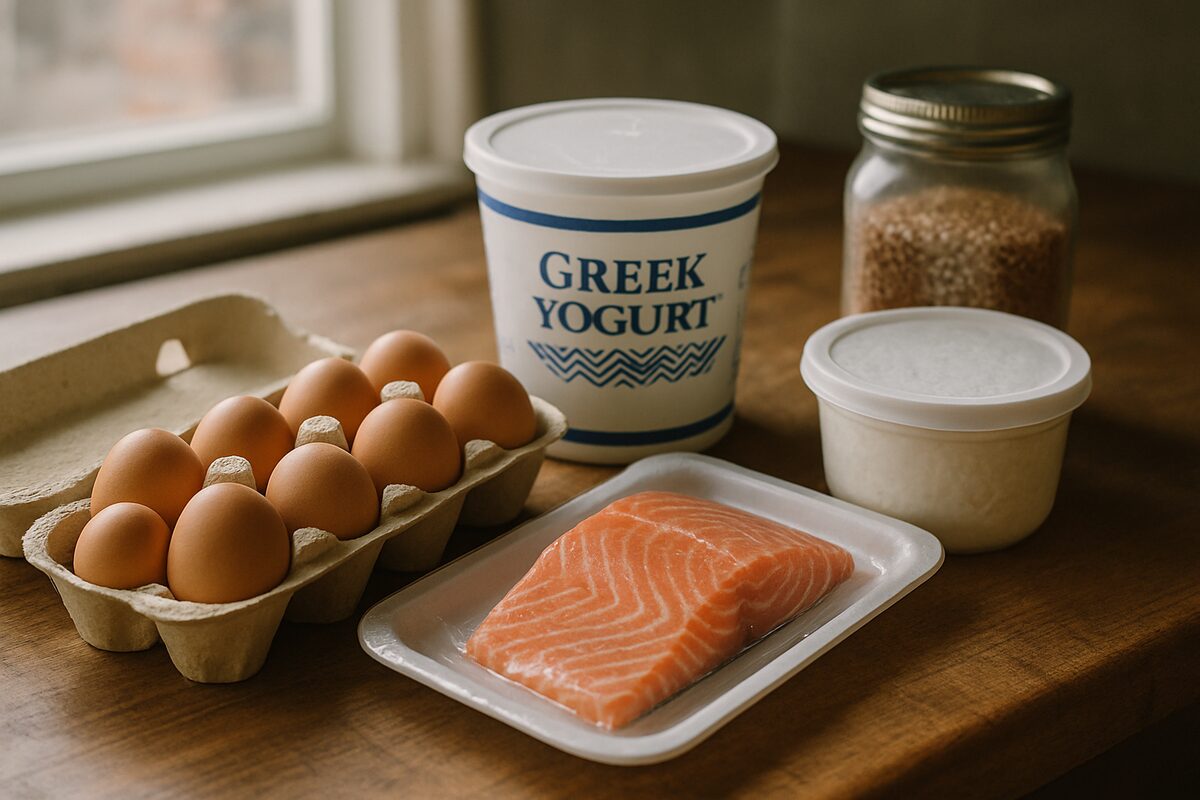
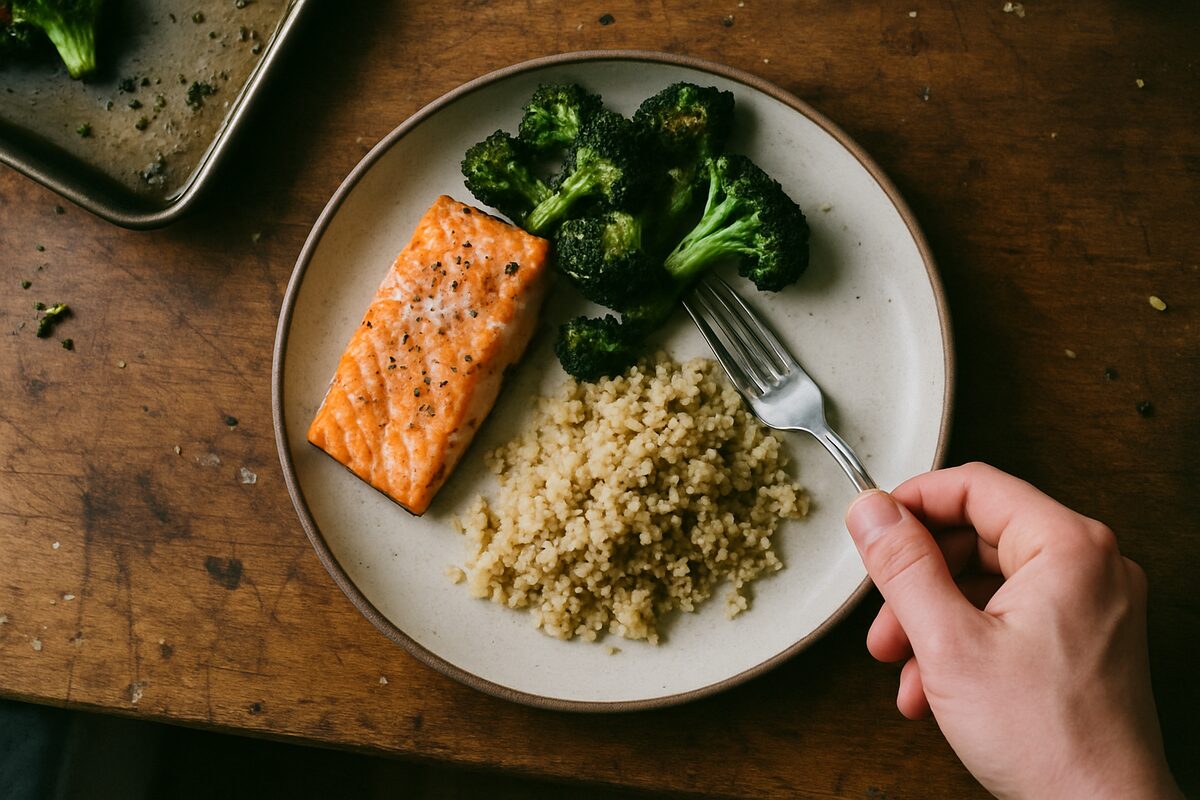
Decide on the protein component first — the eggs, the fish, the yogurt, the beans — and eat it first, too. On a GLP-1, fullness can arrive abruptly. If you start with toast and finish with chicken, the chicken is what gets left behind.
2. Distribute it across the day
Rather than a token breakfast and a large protein-heavy dinner, the common advice is to include a protein source at each meal and snack. Smaller, repeated servings fit a shrunken appetite better than one large plate you may not be able to finish.
Realistic sources when your appetite is small
MedlinePlus lists meat, poultry, fish, eggs, dairy, legumes, nuts, and soy foods among standard protein sources. On a GLP-1, the practical question becomes "what protein can I actually finish?" Softer textures and smaller volumes tend to win.
| Protein source | Why it suits smaller appetites | Notes |
|---|---|---|
| Greek yogurt and cottage cheese | Soft, cold, no cooking, small volume per serving | Plain versions avoid added sugar; also contribute calcium |
| Eggs | Compact, quick to prepare, tolerated when richer foods aren't | Scrambled or soft-boiled is often gentler than fried |
| Fish and canned tuna or salmon | Tender texture, cooks quickly, modest portions feel manageable | Canned options need zero prep on low-energy days |
| Legumes (lentils, beans, chickpeas) | Work in soups and small bowls; budget-friendly | Fiber content helps some people, bothers others — adjust to your gut |
| Tofu and other soy foods | Soft, mild, absorbs flavors, works in small portions | A standard plant protein option per MedlinePlus |
If nausea or early fullness is limiting what you can eat at all, see our guides to eating on a GLP-1 and GLP-1 side effects in women.
Why we won't give you a grams number
You have almost certainly seen confident, universal protein targets on social media — one number, presented as correct for every woman on a GLP-1. We deliberately do not publish one, because no single number is correct for everyone. Protein needs vary with body size, kidney health, age, and activity, and a target reasonable for one person may be inappropriate for another — particularly anyone with reduced kidney function. The clinician who prescribed your medication, or a registered dietitian, can set a target that accounts for your labs, history, and goals. That is the number worth following — not influencer math built for engagement rather than for you.
The standard companion: resistance activity
Protein supplies the building material; your muscles still need a reason to keep it. That is why resistance activity — bodyweight movements, bands, weights, anything that asks muscles to work against load — is the standard companion advice during medically supported weight loss. No gym membership required; what matters is that your muscles are regularly challenged while the scale is moving. Ask your clinician what is appropriate for your fitness level and joints.
A note on "high protein" marketing
Grocery shelves are crowded with cookies, cereals, and chips wearing "high protein" labels. A claim on the front of a package is marketing; the nutrition panel on the back is the actual information. Many of these products carry modest protein alongside considerable added sugar and calories — which matters when total intake is limited. Plain protein foods — eggs, fish, dairy, legumes, tofu — deliver protein without a label to decode. Read the panel, not the slogan, and see our GLP-1 glossary for nutrition terms.
Bottom line
Protein-first is a practical ordering habit: pick the protein before the rest of the meal, eat it first, and spread it across the day in portions you can finish. Skip universal targets from social media, get your personal number from your clinician or dietitian, and pair the food with resistance activity. Our GLP-1 FAQ for women covers what patients ask most.
Sources
- MedlinePlus (NIH). Protein in diet. medlineplus.gov/ency/article/002467.htm
- MedlinePlus (NIH). Definitions of health and nutrition terms. medlineplus.gov/definitions/nutritiondefinitions.html
- Wilding JPH, et al. Once-weekly semaglutide in adults with overweight or obesity (STEP 1). N Engl J Med, 2021. pubmed.ncbi.nlm.nih.gov/33567185/