Nutrition
Eating on a GLP-1: What Changes, What to Prioritize, and the Small-Meals Reality
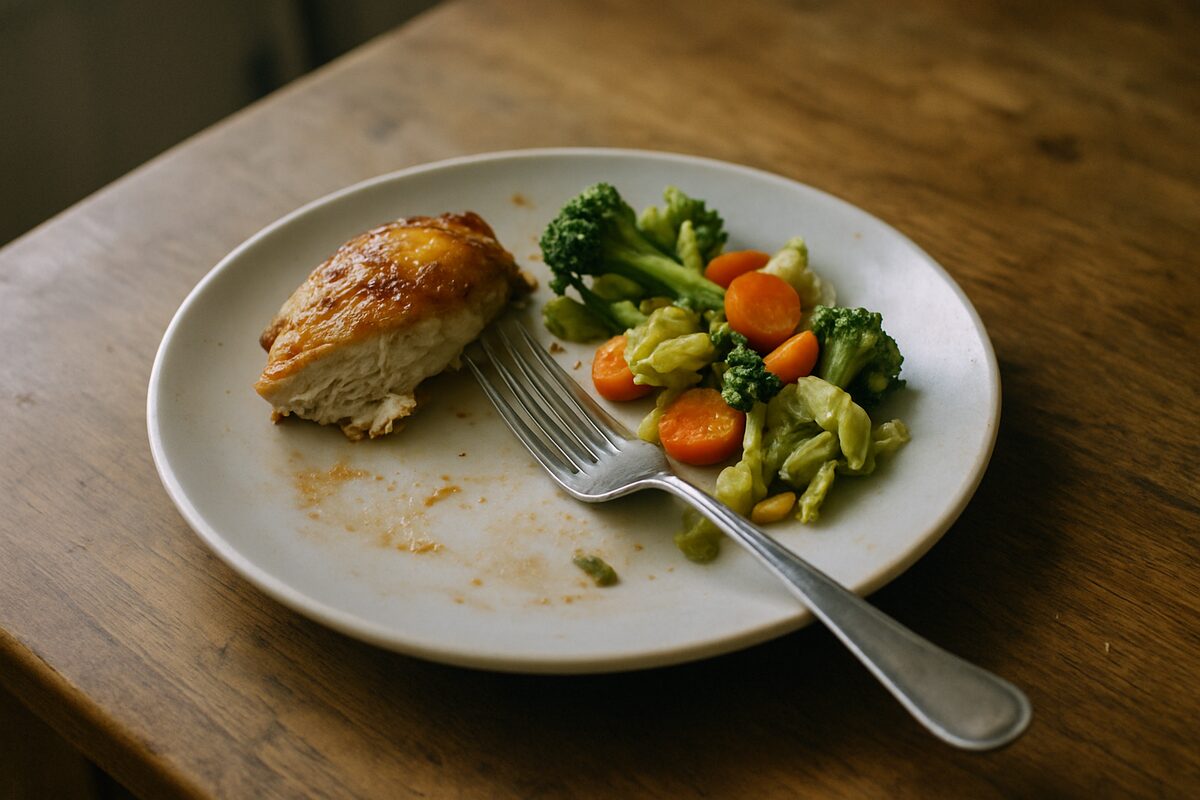
When a GLP-1 medication suppresses your appetite, the central nutrition problem flips: instead of eating less of everything, the challenge becomes fitting enough of what your body needs into a much smaller volume of food. That is why clinicians and dietitians commonly advise putting protein and produce first, eating smaller meals more often for GI comfort, and staying deliberately hydrated — details to personalize with your own prescriber or dietitian. This is journalism, not a meal plan.
Women starting a GLP-1 often describe the shift in similar terms: portions that once felt normal suddenly feel like too much, fullness arrives a few bites in, and certain foods stop appealing. These changes are the point of the drug class — but they also change what "eating well" means. Here is how the picture shifts, and where the practical traps sit.
What appetite suppression actually changes
Three patterns come up again and again in clinician discussions and patient reports. First, smaller portions: the medication blunts hunger, so the drive to finish a full plate fades. Second, earlier satiety: because GLP-1 drugs slow how quickly the stomach empties, fullness lands sooner and lingers longer — the same mechanism behind the nausea and other GI effects we cover in our guide to GLP-1 side effects in women. Third, food aversions: some women report that specific foods, often greasy or very sweet ones, become actively unappealing. None of these is a malfunction; they are commonly reported, clinician-discussed features of how the medication works.
Worth remembering: in STEP 1, the pivotal semaglutide trial, participants did not take the drug in a vacuum — they received lifestyle intervention alongside it, including counselling on diet and activity. The trial results people cite came from medication plus attention to eating, not medication instead of it.
Why nutrient density matters more, not less
When total intake shrinks, every bite carries more responsibility. A dietary pattern that was adequate at larger portions can quietly become inadequate at GLP-1-sized ones — there is simply less room for foods that deliver little beyond calories. The commonly advised response is to prioritize nutrient-dense foods — as the NIH's MedlinePlus defines them, foods that pack vitamins, minerals, and other nutrients relative to their calories.
In practice, clinicians and dietitians tend to put two categories at the front of the line:
Protein first
MedlinePlus describes protein as a building block for muscle, bone, skin, and blood — and unlike some nutrients, the body does not store it for later, which is one reason regular intake matters. During intentional weight loss, protecting muscle is a standard clinical concern, so the common advice is to eat the protein portion of a meal early, before fullness arrives. How much protein is right for you is exactly the kind of question to put to your prescriber or a dietitian — it depends on your health history, and we deliberately do not publish targets.
Produce close behind
Vegetables and fruit carry fiber, vitamins, and minerals into a shrinking diet, and fiber is a practical ally against the constipation that appears in the GLP-1 side-effect profile. When appetite is limited, the commonly advised move is to let produce and protein crowd the plate before anything else does.
The small-frequent-meals reality
Because the stomach empties more slowly, many women find that three conventional meals sit heavily. The pattern clinicians commonly suggest instead: smaller meals, eaten more often, at a slower pace, stopping at comfortable fullness rather than at a clean plate. This is a GI-comfort strategy as much as a nutrition one — large or rich meals are a frequent trigger for the nausea that dominates this drug class's side-effect profile.
| Priority | Why it matters on a GLP-1 | The practical version (personalize with your clinician) |
|---|---|---|
| Protein | Supports muscle and tissue during weight loss; the body doesn't store it | Put the protein portion of the meal first, before fullness arrives |
| Vegetables & fruit | Fiber, vitamins, and minerals in a smaller total diet; fiber helps with constipation | Let produce fill most of the remaining plate |
| Meal pattern | Slower stomach emptying makes big meals sit heavily | Smaller meals, more often, eaten slowly; stop at comfortable fullness |
| Hydration | Reduced appetite often means reduced drinking too; fluids matter if vomiting or diarrhea strike | Sip water through the day rather than relying on thirst |
The pitfalls clinicians warn about
Skipping meals entirely. No appetite can slide into no eating. Very low intake makes GI symptoms harder to manage and gives protein and micronutrients no vehicle — worth flagging to your prescriber if it becomes a pattern rather than an occasional day.
Defaulting to ultra-processed convenience food. When you're barely hungry, whatever is easiest wins — and if the easiest thing is a snack food, the small amount you do eat delivers little. The fix most dietitians suggest is logistical, not moral: keep nutrient-dense options as convenient as the processed ones.
Alcohol on a suppressed appetite. Drinking on top of little food changes how alcohol hits, adds calories with no nutrition, and can aggravate an already sensitive stomach. Many clinicians advise cutting back or pausing alcohol during treatment — another item for the personalized conversation.
Hydration drift. Appetite suppression often quiets thirst cues along with hunger, and fluids become urgent if vomiting or diarrhea show up. Deliberate sipping through the day is the commonly advised default.
The honest frame
Eating patterns are also where the long game is decided: appetite returns when the medication stops, which is why we cover what happens to weight after stopping a GLP-1 separately. For the efficacy side, see our review of semaglutide's trial results in women; for quick answers, start with our GLP-1 FAQ for women. On food specifically, your prescriber or dietitian is the one who can turn these general patterns into a plan that fits your labs, history, and life. That conversation is the plan — this article is the briefing for it.
Sources
- MedlinePlus (NIH) — Protein in diet: medlineplus.gov/ency/article/002467.htm
- MedlinePlus (NIH) — Definitions of health terms: Nutrition: medlineplus.gov/definitions/nutritiondefinitions.html
- Wilding JPH, et al. Once-Weekly Semaglutide in Adults with Overweight or Obesity (STEP 1). N Engl J Med, 2021: pubmed.ncbi.nlm.nih.gov/33567185/
- US Health Digest — GLP-1 Side Effects in Women: What the Trials Report